
Managing large crowds during events requires sophisticated understanding of human movement patterns, predictive analytics, and strategic planning to prevent dangerous surges and ensure public safety.

The science of crowd dynamics has evolved dramatically over the past decades, particularly following high-profile incidents that exposed the catastrophic consequences of poor crowd management. From music festivals to sporting events, religious gatherings to public celebrations, understanding how pedestrian surges develop and implementing effective control measures has become paramount for event organizers, urban planners, and safety officials worldwide.
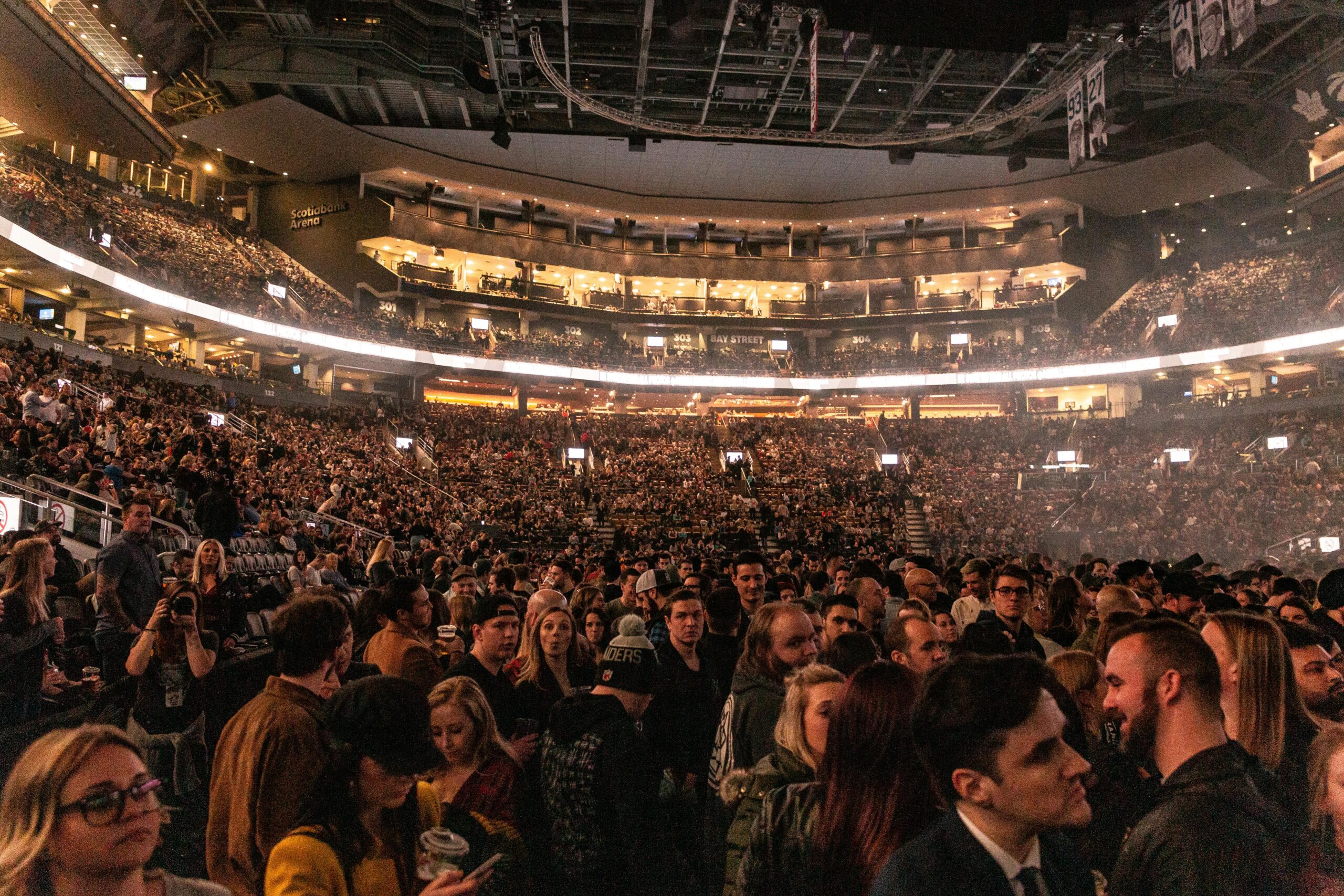
Event-driven pedestrian surges represent one of the most challenging aspects of modern crowd management. These sudden increases in crowd density and movement occur when large groups of people respond simultaneously to a stimulus—whether it’s the opening of gates, the start of a performance, or an emergency situation. The consequences of mismanaged surges can range from minor discomfort to tragic disasters, making this topic critically important for anyone involved in organizing or securing public gatherings.
🌊 The Physics and Psychology Behind Crowd Surges
Understanding crowd surges requires examining both the physical dynamics of human movement and the psychological factors that influence group behavior. When individuals gather in large numbers, they collectively create a fluid-like system that follows predictable patterns while remaining vulnerable to sudden instabilities.
Crowd density plays a fundamental role in surge development. Research indicates that when density exceeds four to five people per square meter, individual control over movement diminishes significantly. At this threshold, the crowd begins to move as a single entity, with external forces rather than individual decisions dictating motion. This transition point represents a critical danger zone where small disturbances can cascade into dangerous surges.
The psychological dimension is equally important. Crowd behavior is heavily influenced by social contagion—the rapid spread of emotions, actions, and reactions through a group. When someone in a dense crowd begins pushing forward, perhaps to get a better view or reach an exit, adjacent individuals instinctively respond to maintain their balance and personal space. This ripple effect can amplify exponentially, transforming minor movements into powerful surges within seconds.
The Triggering Mechanisms of Pedestrian Surges
Several common triggers initiate event-driven surges, each requiring specific management strategies:
- Scheduled attractions: Concert starts, celebrity appearances, or sporting event kickoffs create predictable surge points
- Limited resource access: Gate openings, merchandise sales, or food vendors with restricted capacity
- Information asymmetry: Rumors, announcements, or perceived emergencies that cause differential awareness across the crowd
- Environmental factors: Weather changes, infrastructure failures, or unexpected obstacles
- Emotional catalysts: Excitement, fear, or collective enthusiasm that synchronizes crowd behavior
📊 Predictive Analytics and Real-Time Monitoring Technologies
Modern crowd management has been revolutionized by technological advances that enable real-time monitoring and predictive modeling. These tools transform crowd safety from reactive emergency response to proactive risk mitigation.
Computer vision systems equipped with artificial intelligence can now analyze video feeds to detect dangerous crowd densities before they reach critical thresholds. These systems track movement patterns, identify bottlenecks, and alert operators to developing surge conditions. Machine learning algorithms trained on thousands of hours of crowd footage can recognize subtle behavioral changes that precede dangerous situations.
Wireless sensor networks and smartphone data provide complementary information streams. By analyzing aggregated, anonymized mobile device signals, event managers can create heat maps showing crowd distribution in real-time. This technology has proven particularly valuable for large-scale outdoor events where visual monitoring faces limitations.
Simulation Modeling for Event Planning
Before events even begin, sophisticated simulation software allows planners to test various scenarios and identify potential surge points. These digital twins of physical venues incorporate architectural features, expected attendance figures, and behavioral assumptions to model crowd flow under different conditions.
Agent-based modeling represents one of the most powerful simulation approaches. This technique creates virtual individuals with realistic behavioral parameters, then simulates how thousands of these agents interact within the event space. Planners can test the impact of different entry configurations, barrier placements, and timing strategies to optimize safety margins.
🏗️ Strategic Infrastructure Design for Surge Prevention
Physical venue design constitutes the first line of defense against dangerous pedestrian surges. Thoughtful architecture that accounts for human behavior patterns can prevent surge conditions from developing in the first place.
The concept of gradual density transition has become central to modern venue design. Rather than creating single points where crowds must suddenly compress or expand, effective layouts feature graduated zones that allow density changes to occur smoothly. This approach mimics natural flow dynamics and reduces the mechanical stress that triggers surges.
Multiple entry and exit points distributed strategically throughout a venue prevent the concentration of pedestrian flow that leads to surge conditions. Each access point should be designed with adequate width based on expected traffic, with international standards typically recommending minimum widths of 1.2 meters per 1,000 occupants for normal conditions, with increased capacity for emergency scenarios.
Intelligent Barrier Systems and Flow Directors
Temporary barriers serve as critical tools for crowd flow management, but their implementation requires careful consideration. Static barriers can create dangerous compression zones if poorly positioned, while flexible barrier systems that adapt to real-time conditions offer superior safety performance.
Queue management infrastructure has evolved significantly, moving beyond simple rope lines to sophisticated systems that provide shade, entertainment, and information to waiting crowds. These enhanced queuing environments reduce impatience and aggressive behavior that can trigger surges when access finally opens.
| Infrastructure Element | Primary Function | Surge Prevention Mechanism |
|---|---|---|
| Expansion zones | Pressure relief | Provides space for temporary density increases |
| Visual guidance systems | Information distribution | Reduces uncertainty-driven behavior |
| Controlled access points | Flow regulation | Prevents sudden density spikes |
| Emergency exits | Rapid evacuation | Distributes exit demand across multiple points |
👥 Training and Coordination for Crowd Management Teams
Even the most sophisticated technology and infrastructure cannot substitute for well-trained personnel who understand crowd dynamics and can respond effectively to developing situations. Crowd management represents a specialized skill set that requires ongoing education and practical experience.
Effective training programs combine theoretical knowledge of crowd psychology and physics with practical scenarios that simulate real-world challenges. Staff members must learn to recognize early warning signs of dangerous conditions—changes in crowd noise levels, unusual movement patterns, or visible distress among attendees.
Communication protocols form the backbone of coordinated crowd management. Establishing clear hierarchies, standardized terminology, and multiple redundant communication channels ensures that critical information reaches decision-makers quickly. Radio systems, dedicated mobile applications, and visual signaling all play roles in maintaining effective coordination across large event spaces.
Developing Situation Awareness and Decision-Making Skills
The most challenging aspect of crowd management involves making rapid decisions with incomplete information under high-stress conditions. Training methodologies borrowed from aviation, military operations, and emergency medicine have proven valuable for developing these capabilities in crowd management professionals.
Scenario-based exercises that place trainees in realistic situations requiring immediate decisions help build the mental models necessary for effective performance. After-action reviews following both training exercises and actual events create continuous learning opportunities that refine organizational knowledge over time.
⚡ Emergency Response Protocols and Surge Intervention
Despite best prevention efforts, situations will arise requiring active intervention to prevent or mitigate dangerous surges. Having well-rehearsed emergency protocols enables rapid, coordinated responses that can prevent minor incidents from escalating into disasters.
The counter-flow technique represents one of the most effective intervention methods for managing developing surges. When crowd momentum begins building in a dangerous direction, strategically positioned staff can create opposing flows or lateral diversions that disrupt the surge pattern without creating additional compression. This approach requires precise timing and coordination but can effectively dissipate dangerous crowd energy.
Communication with the crowd itself becomes crucial during critical situations. Public address systems, digital signage, and staff equipped with megaphones can provide clear, calm instructions that help redirect crowd behavior. The messaging must be specific, actionable, and repeated frequently to overcome the noise and confusion typical of surge situations.
Graduated Response Frameworks
Effective emergency protocols operate on graduated response principles, with actions scaled to match the severity of developing conditions. Early-stage interventions might involve subtle redirection measures, while advanced-stage responses could include stopping performances, activating additional exits, or implementing full evacuation procedures.
Decision trees and trigger points defined during the planning phase enable rapid assessment and appropriate response selection. These frameworks help management teams overcome the natural human tendency toward normalcy bias—the cognitive phenomenon where people underestimate danger signals and delay necessary actions.
🌐 Case Studies: Learning from Success and Failure
Historical analysis of both successful crowd management operations and tragic failures provides invaluable lessons for improving future practices. Each incident offers specific insights into which factors contribute to safety or danger under different circumstances.
The Hajj pilgrimage in Mecca represents one of the world’s most challenging crowd management scenarios, with millions of pilgrims performing rituals in constrained spaces. Following a devastating 2015 incident, Saudi authorities implemented comprehensive reforms including enhanced monitoring systems, modified ritual timing, and redesigned infrastructure. Subsequent pilgrimages have demonstrated significantly improved safety outcomes, illustrating how systematic changes reduce surge risks even at massive scale.
Music festivals have also contributed important lessons to crowd management science. The evolution of practices at major events like Glastonbury, Coachella, and Tomorrowland demonstrates how continuous improvement based on incident analysis, attendee feedback, and technological adoption creates progressively safer environments without diminishing the event experience.
🔮 Future Directions in Crowd Dynamics Management
The field of crowd management continues evolving rapidly as new technologies, research findings, and methodologies emerge. Several promising developments suggest significant improvements in surge prevention capabilities over the coming years.
Artificial intelligence systems are becoming increasingly sophisticated in their ability to predict dangerous conditions before human observers recognize warning signs. Next-generation platforms will integrate multiple data streams—video analytics, environmental sensors, social media sentiment, and historical patterns—to provide comprehensive situational awareness with actionable recommendations for intervention.
Augmented reality applications for crowd management staff represent another frontier technology. These systems can overlay real-time density information, predicted flow patterns, and recommended actions directly onto operators’ fields of vision, enabling more informed decision-making without requiring attention shifts to separate monitoring screens.
Wearable technology for attendees offers intriguing possibilities for both safety enhancement and experience improvement. Smart wristbands could provide navigation assistance, alert wearers to congested areas, and even enable emergency services to locate individuals requiring assistance. Privacy considerations and voluntary adoption remain challenges, but the potential benefits warrant continued exploration.
💡 Practical Implementation Strategies for Event Organizers
For organizations planning events with significant attendance, translating crowd management principles into practical operational plans requires systematic approaches tailored to specific circumstances. No single formula applies universally, but certain implementation strategies consistently improve safety outcomes.
Begin with comprehensive risk assessment that identifies all potential surge points within your specific venue and event format. Consider not just obvious locations like entry gates and stages, but also secondary gathering points such as restroom facilities, food vendors, and designated meeting areas. Map expected pedestrian flows throughout the event timeline, paying particular attention to high-volume transition periods.
Develop layered contingency plans that address various severity levels of crowd incidents. Your planning should include specific trigger points that activate each response level, designated decision-makers with clear authority, and communication protocols for coordinating actions across multiple teams. Regular drills that test these plans under realistic conditions expose weaknesses before actual implementation.
Engage with local emergency services early in the planning process. Fire departments, law enforcement agencies, and emergency medical services bring specialized expertise in crowd safety and can provide valuable input on venue layouts, access routes, and response protocols. Their familiarity with your plans enables faster, more effective responses if serious incidents occur.
🎯 Building a Safety-First Culture in Event Management
Beyond specific techniques and technologies, creating genuinely safe events requires organizational cultures that prioritize crowd safety at every decision point. This cultural foundation determines how effectively technical capabilities translate into real-world protection for attendees.
Leadership commitment to safety must be visible, consistent, and supported with adequate resources. When budget constraints or schedule pressures arise, organizations with strong safety cultures protect essential crowd management elements rather than treating them as expendable. This prioritization begins at the executive level and permeates throughout operational teams.
Encouraging open reporting of safety concerns without fear of blame creates the information flow necessary for continuous improvement. Staff members closest to crowds often observe warning signs before management recognizes problems, but they will only share these observations in environments where concerns are welcomed rather than dismissed or punished.
Understanding and managing event-driven pedestrian surges represents a complex challenge requiring integration of multiple disciplines—physics, psychology, engineering, technology, and organizational management. As events continue growing in scale and complexity, the importance of sophisticated crowd dynamics expertise will only increase. By combining proven principles with emerging technologies and maintaining unwavering commitment to safety, event organizers can create environments where large crowds gather safely, allowing people to focus on shared experiences rather than personal security concerns.
The future of crowd management lies not in preventing people from gathering—these shared experiences represent essential elements of human culture and community—but in mastering the flow dynamics that make large gatherings both possible and safe. Through continued research, technology development, and knowledge sharing across the global events industry, we can ensure that the crowds of tomorrow move with intelligence, safety, and purpose.